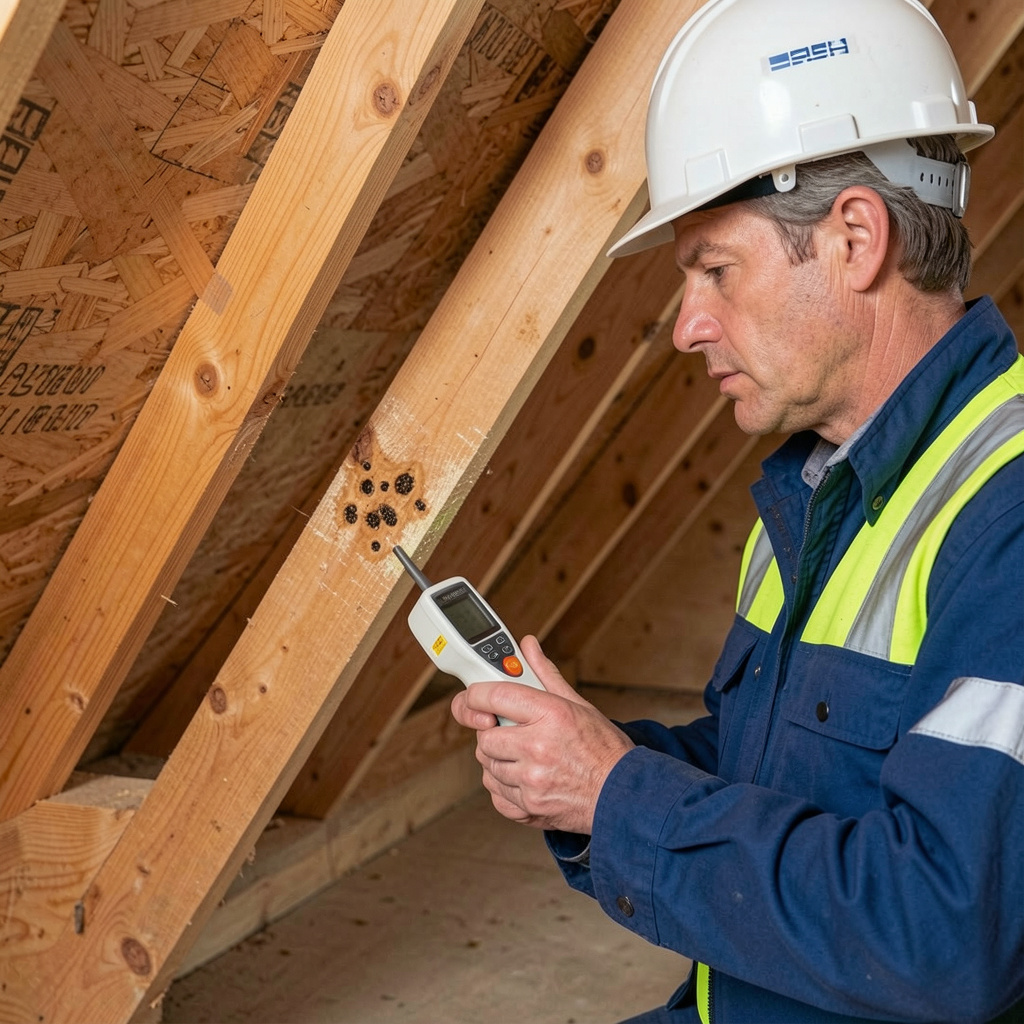
Discovering signs of woodworm in your home can be alarming. Small exit holes, fine wood dust, or weakened timber often lead homeowners to ask the same question: Should I treat the problem myself or hire a professional? The answer depends on several factors, including whether the infestation is active, the type of wood-boring beetle involved, the extent of the damage, and the importance of the affected timber.
While DIY products may be suitable for minor, accessible situations, professional treatment is often recommended for structural timber, widespread infestations, or situations where the activity cannot be confirmed. Understanding the advantages and limitations of each approach helps homeowners make informed decisions and avoid unnecessary costs.
This guide compares DIY and professional woodworm treatment, outlines the benefits and drawbacks of each, and explains when professional expertise may be the better choice.
What Is Woodworm?
Woodworm is the common name for the larvae of several species of wood-boring beetles.
Common species include:
- Common Furniture Beetle
- Deathwatch Beetle
- House Longhorn Beetle
- Powderpost Beetles
The larvae feed inside timber before emerging as adult beetles through small exit holes.
Confirm the Infestation Is Active
Before considering any treatment, it’s important to determine whether the infestation is active.
Possible signs include:
- Fresh wood dust (frass)
- Recently emerged adult beetles
- Clean-looking exit holes
- New damage to timber
Old exit holes alone do not necessarily mean that woodworm is still present.
What DIY Woodworm Treatment Involves
DIY treatment typically uses woodworm treatment products designed for application to accessible wooden surfaces.
Homeowners may treat:
- Furniture
- Shelving
- Decorative wood
- Small exposed timber
DIY treatment is generally limited to areas that are easy to inspect and safely reach.
Pros of DIY Woodworm Treatment
DIY treatment offers several advantages:
- Lower initial cost
- Convenient for small projects
- Readily available products
- Suitable for accessible timber
- Can be completed without scheduling a contractor
For minor, confirmed infestations in non-structural wood, DIY treatment may be a practical option.
Cons of DIY Woodworm Treatment
DIY treatment also has important limitations.
Potential drawbacks include:
- Difficult to confirm active infestation
- Limited penetration into thick timber
- May not reach larvae deep inside wood
- Risk of misidentifying the beetle species
- Unsuitable for significant structural damage
Incorrect treatment may allow an infestation to continue unnoticed.
What Professional Treatment Involves
Professional woodworm treatment begins with a detailed inspection.
The assessment typically includes:
- Identifying the beetle species
- Confirming active or historic infestation
- Evaluating structural condition
- Checking moisture levels
- Recommending the most appropriate treatment
The chosen method depends on the condition of the timber and the extent of the infestation.
Pros of Professional Woodworm Treatment
Professional treatment offers several benefits:
- Accurate pest identification
- Confirmation of active infestation
- Access to specialized equipment
- Suitable for structural timber
- Comprehensive inspection
- Treatment recommendations tailored to the property
Professional expertise reduces the risk of unnecessary or ineffective treatment.
Cons of Professional Woodworm Treatment
Potential disadvantages include:
- Higher upfront cost
- Appointment scheduling
- Access may be required to roof spaces or crawl spaces
- Larger projects may take longer to complete
However, professional treatment can often reduce long-term repair costs by addressing problems early.
Modern Woodworm Treatment Options
Professional treatment methods vary depending on:
- Beetle species
- Severity of infestation
- Structural condition
- Accessibility
Options may include approved chemical treatments and modern heat-based technologies.
Microwave Woodworm Treatment
One increasingly popular chemical-free option is microwave woodworm treatment.
Professional microwave equipment uses dielectric heating to generate controlled heat inside timber.
The treatment is designed to eliminate:
- Woodworm larvae
- Beetle eggs
- Pupae
- Adult wood-boring beetles
Benefits
- Chemical-free
- No pesticide residues
- Localized treatment
- Minimal disruption
- Environmentally responsible
- Suitable for many heritage buildings
- Helps preserve original structural timber
Microwave treatment is typically carried out by trained professionals and may be particularly suitable where preserving original timber is a priority.
Address Moisture Problems
Some wood-boring beetle species are more likely to infest timber with elevated moisture levels.
Inspect for:
- Roof leaks
- Plumbing leaks
- Poor ventilation
- Condensation
- High indoor humidity
Correcting moisture problems helps reduce the likelihood of future infestations regardless of the treatment method used.
DIY vs. Professional Treatment Comparison
| DIY Treatment | Professional Treatment |
|---|---|
| Lower upfront cost | Higher initial investment |
| Best for small, accessible items | Suitable for structural and extensive infestations |
| Limited inspection capability | Comprehensive property assessment |
| Relies on homeowner identification | Accurate pest species identification |
| Basic treatment methods | Access to specialized equipment and multiple treatment options |
Choosing the right option depends on the condition of the timber and the nature of the infestation.
When DIY May Be Suitable
DIY treatment may be appropriate when:
- The affected item is small and non-structural.
- The infestation has been confirmed as active.
- The timber is easily accessible.
- Damage appears limited.
- The homeowner follows the product instructions carefully.
Even then, monitoring the treated area remains important.
When Professional Help Is Recommended
Professional treatment is generally the better choice when:
- Structural timber is affected.
- The infestation covers a large area.
- The beetle species is unknown.
- Moisture problems are present.
- Valuable antique or heritage timber is involved.
- Significant structural weakening is suspected.
A professional inspection helps ensure the correct treatment is selected.
Common Mistakes to Avoid
Avoid these common errors:
- Treating old exit holes without confirming active infestation.
- Ignoring fresh frass.
- Using DIY products on severely damaged structural timber.
- Overlooking moisture problems.
- Assuming every wood-boring insect requires the same treatment.
Proper diagnosis is essential for successful pest management.
Common Myths About DIY and Professional Treatment
Myth 1: DIY Products Solve Every Woodworm Problem
Fact: DIY products may be suitable for some minor situations, but larger or structural infestations often require professional assessment and treatment.
Myth 2: Professional Treatment Is Always Chemical
Fact: Professionals may use a range of methods depending on the situation, including chemical treatments and modern technologies such as microwave woodworm treatment.
Myth 3: If the Holes Are Small, the Problem Must Be Minor
Fact: Small exit holes can still indicate significant hidden damage inside timber. The extent of an infestation cannot be judged by surface appearance alone.
Conclusion
Both DIY and professional woodworm treatment have their place. DIY methods may be appropriate for small, accessible items with limited and confirmed active infestations, while professional treatment is generally the safest choice for structural timber, widespread infestations, valuable furniture, or situations where the level of activity is uncertain.Visit https://www.shashel.eu online for more details.
The most important step is obtaining an accurate diagnosis before treatment begins. By identifying the beetle species, confirming whether the infestation is active, addressing moisture problems, and selecting the most appropriate treatment method, homeowners can protect their timber and avoid unnecessary repair costs. Combined with routine inspections and preventive maintenance, the right treatment approach helps preserve wooden structures for many years to come.